
2026-09-07 · Landscape · Nature
The Flowers That Outran the Waterfall
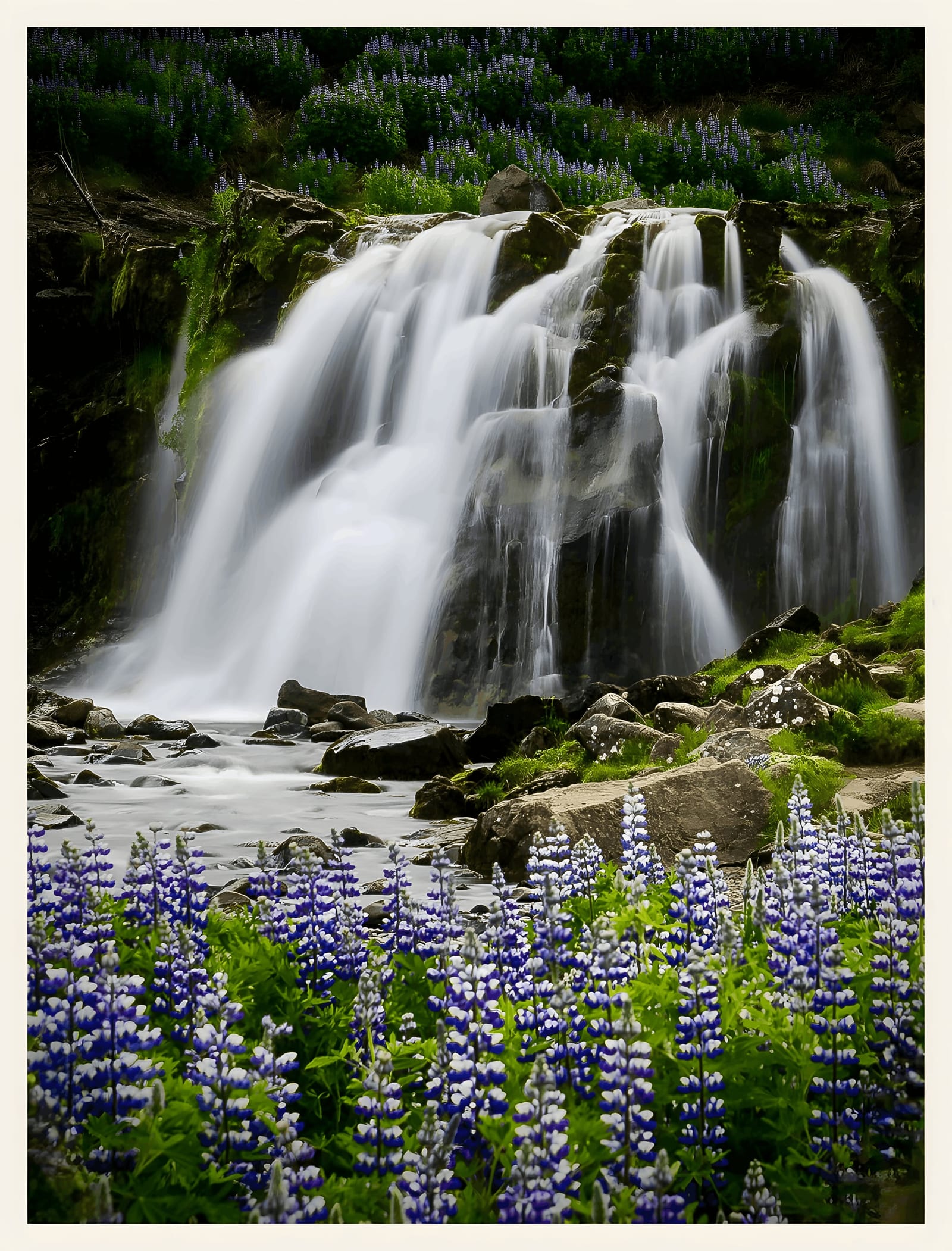
A wide, mossy waterfall like this is often thousands of years older than everything growing in front of it. The lupines crowding this streambank are a much more recent — and much faster-moving — arrival.
An introduced species with a head start
Lupines fix their own nitrogen in the soil, which lets them establish in poor, rocky ground where slower-growing native plants struggle. Once introduced to a region, they can spread along rivers and roadsides within a few seasons, often outcompeting the vegetation that was there first.
Why long exposure suits moving water
A slow shutter — often a second or more — smooths a waterfall's individual splashes into the soft, continuous white seen here. The technique needs the camera to stay completely still, which usually means a tripod and, on a bright day, a filter dark enough to let the shutter stay open that long without overexposing.
A frame with two different timescales
The falls themselves are essentially permanent, carved slowly into rock. The lupine bank in front of them is a single season's growth, gone by autumn — the photograph holding both a geological timescale and an annual one in the same frame.