2026-08-05 · Wildlife · Songbirds · Technique
Small Birds, Big Presence: Kestrels, Robins, and Goldcrests
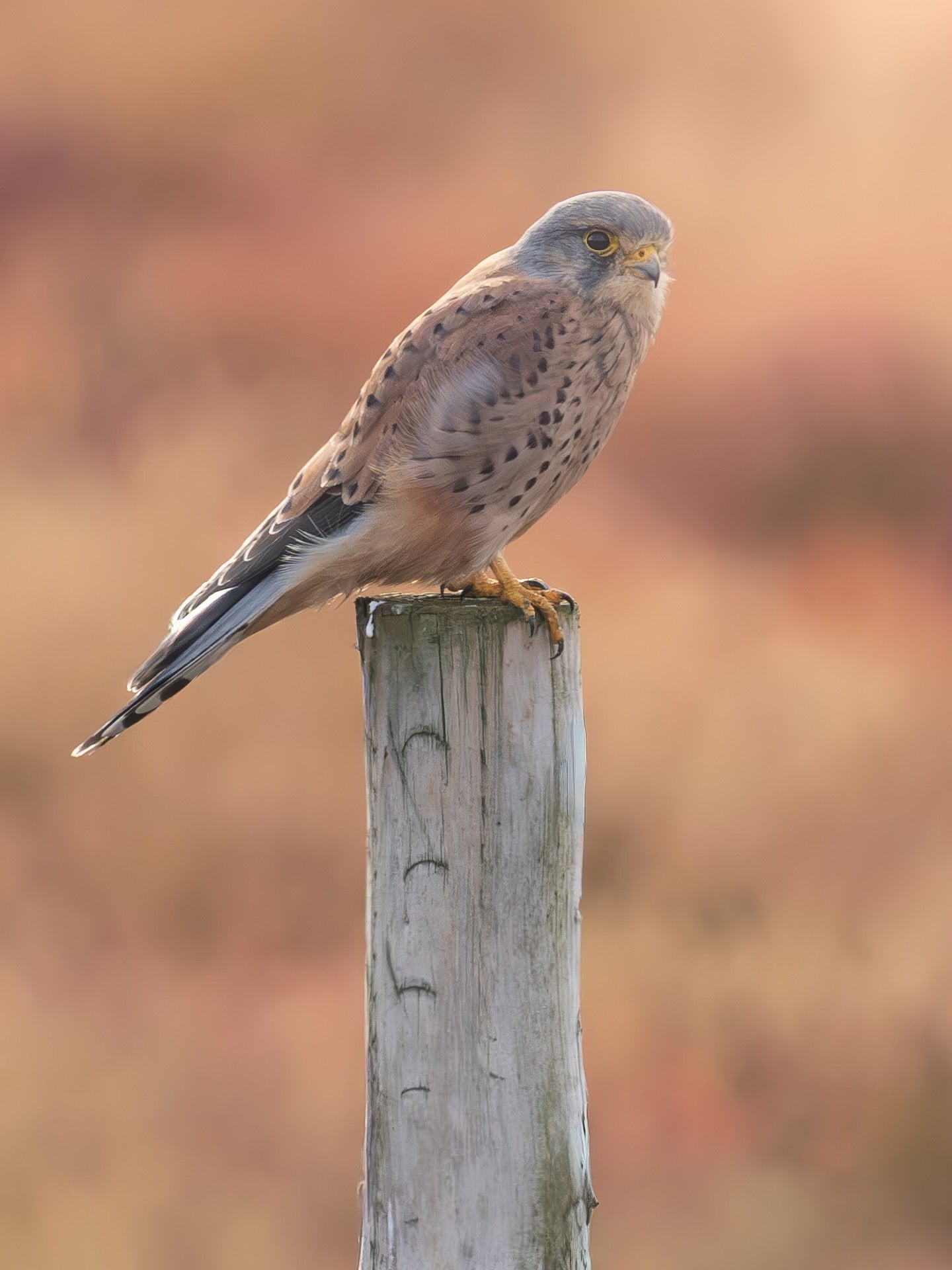
It's easy to assume a strong wildlife photo needs a rare or large subject. Some of the most popular pieces in the Wild Frame Online collection are actually of birds you could see in a garden or from a roadside on any given day.
The kestrel's hover
A kestrel hunting doesn't chase — it hovers, holding its head almost perfectly still in mid-air while its body adjusts against the wind, scanning the ground below for movement. A perched kestrel, like the one on an old fence post, is a different kind of shot: less about motion, more about that sharp, alert stillness right before it drops into a hover or a dive.
Familiar doesn't mean easy
Robins are one of the most photographed garden birds for a reason — they're bold, curious, and often approach rather than flee, which makes close, direct portraits possible in a way that's much harder with more wary species. That confidence is territorial in origin: robins are fiercely defensive of their patch year-round, not just in the breeding season.
Goldcrests are the opposite challenge. As one of Europe's smallest birds, they rarely sit still, constantly working through conifer branches for insects. Getting a clean, sharp frame of one usually means a lot of missed attempts for every shot that works.
Why include them at all
A gallery built only around large or rare species misses most of what's actually out there. Kestrels, robins, and goldcrests are common — but common isn't the same as easy to photograph well, and there's a lot to learn about behavior from birds you can go back and observe again and again.