2026-07-20 · Wildlife · Owls · Behavior
The Silent Hunters: Barn Owls and Short-Eared Owls
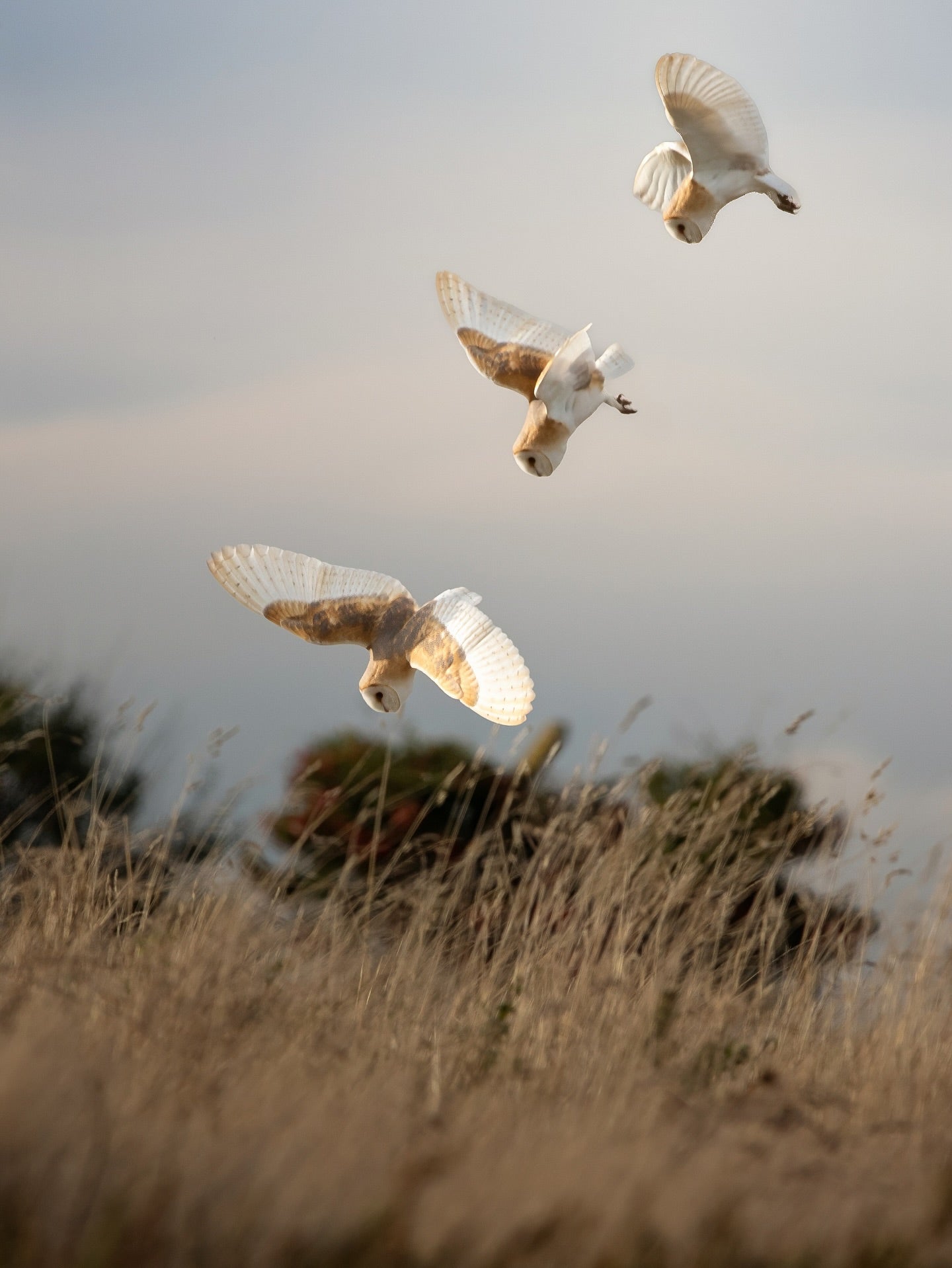
Owls make up a big part of the Wild Frame Online collection, and barn owls and short-eared owls in particular keep pulling me back out at dusk — for very different reasons.
Built for silence
A barn owl's flight feathers have a comb-like leading edge and a soft, fringed trailing edge. That structure breaks up the turbulence that normally makes a wing "whoosh," so the bird can glide over open ground almost silently. Combined with a facial disc that funnels sound to its ears like a satellite dish, a barn owl can pinpoint a vole moving under grass without needing to see it at all.
That silence is also why they're hard to photograph well — there's no sound cue that one is approaching. Most of the barn owl shots in the gallery came from staying still in one spot for a long stretch of a hunting circuit, rather than trying to track a bird actively.
A day-hunting owl
Short-eared owls break the usual owl stereotype: instead of hunting strictly at night, they're often active at dusk and even in daylight, quartering low over open marsh and rough grassland in a slow, buoyant flight pattern that's very different from a barn owl's glide. That low, moth-like flight is what gives the golden-hour shots in the collection their character — the bird is close to the ground and moving slowly enough to track.
Both species hunt largely by sound as much as sight, which is part of why open, quiet habitat — marshland, rough grassland, farmland edges — matters so much to them. It's also why undisturbed access to that kind of habitat is worth protecting, well beyond what makes a good photograph.