
2026-09-15 · Travel · Architecture
The Mills That Became Front Doors
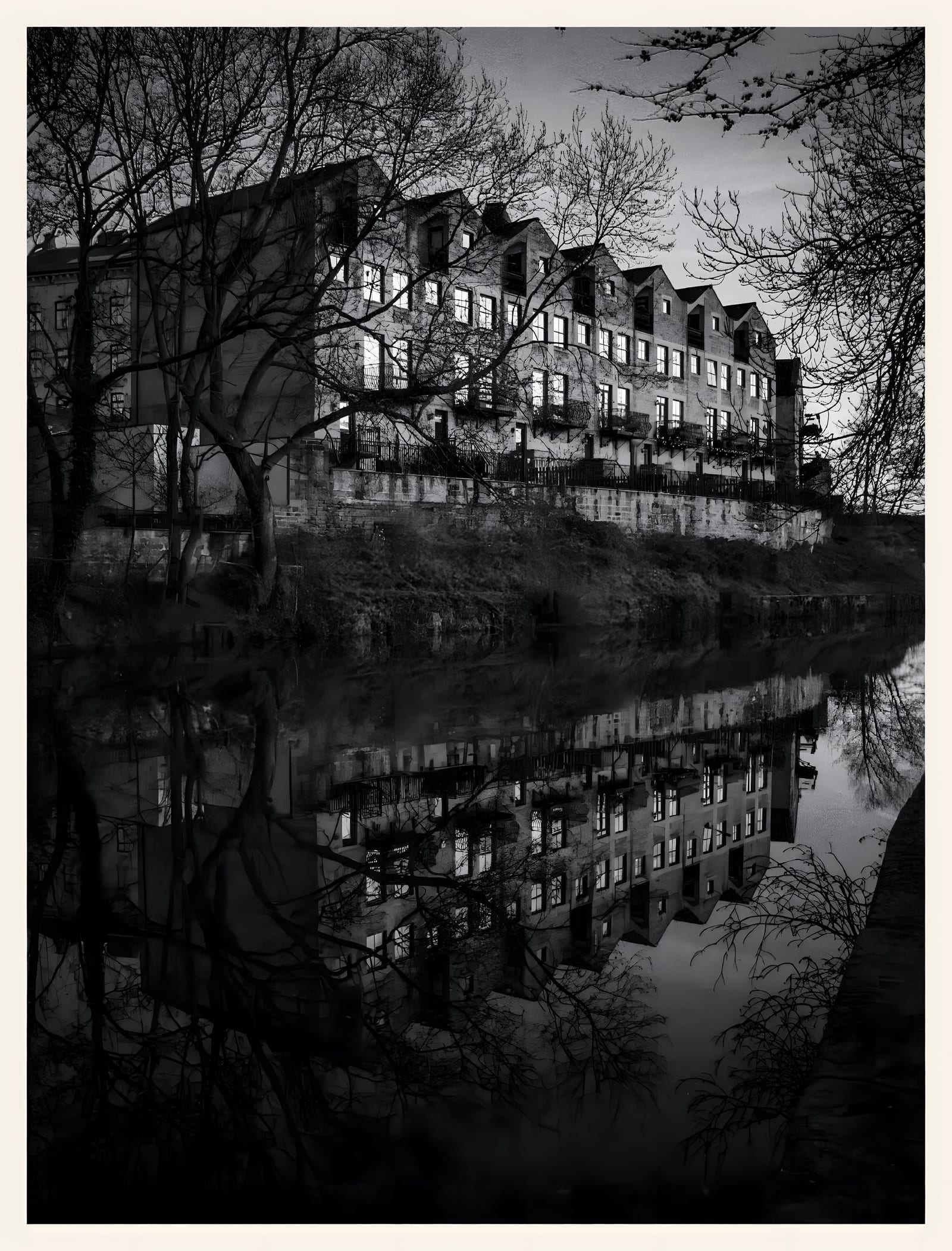
Rivers were the original power source for heavy industry, which is why so many old mills sit directly on the water — not beside a road, not near a town centre, but wherever the current was strongest.
Built for machines, not for comfort
A working mill needed tall windows for daylight over the machinery, thick stone for load-bearing floors stacked with equipment, and a footprint close enough to the river to run a waterwheel. None of that was designed with residents in mind — and yet those exact qualities translate almost directly into generous, light-filled living space.
A wave of conversions
From the 1980s onward, decommissioned mills across Britain were converted into flats and townhouses in large numbers, their industrial bones — exposed stone, oversized windows, high ceilings — kept as a selling point rather than something to disguise.
Still shaped by the water
A converted mill rarely loses its relationship to the river that once powered it. Still water below throws back a near-mirror image of the building on a calm evening, bare branches and windows doubled — a reminder that the site was chosen for the water long before it was chosen for the view.