
2026-09-23 · Wildlife · Behavior
Why Moose and Mist Go Together
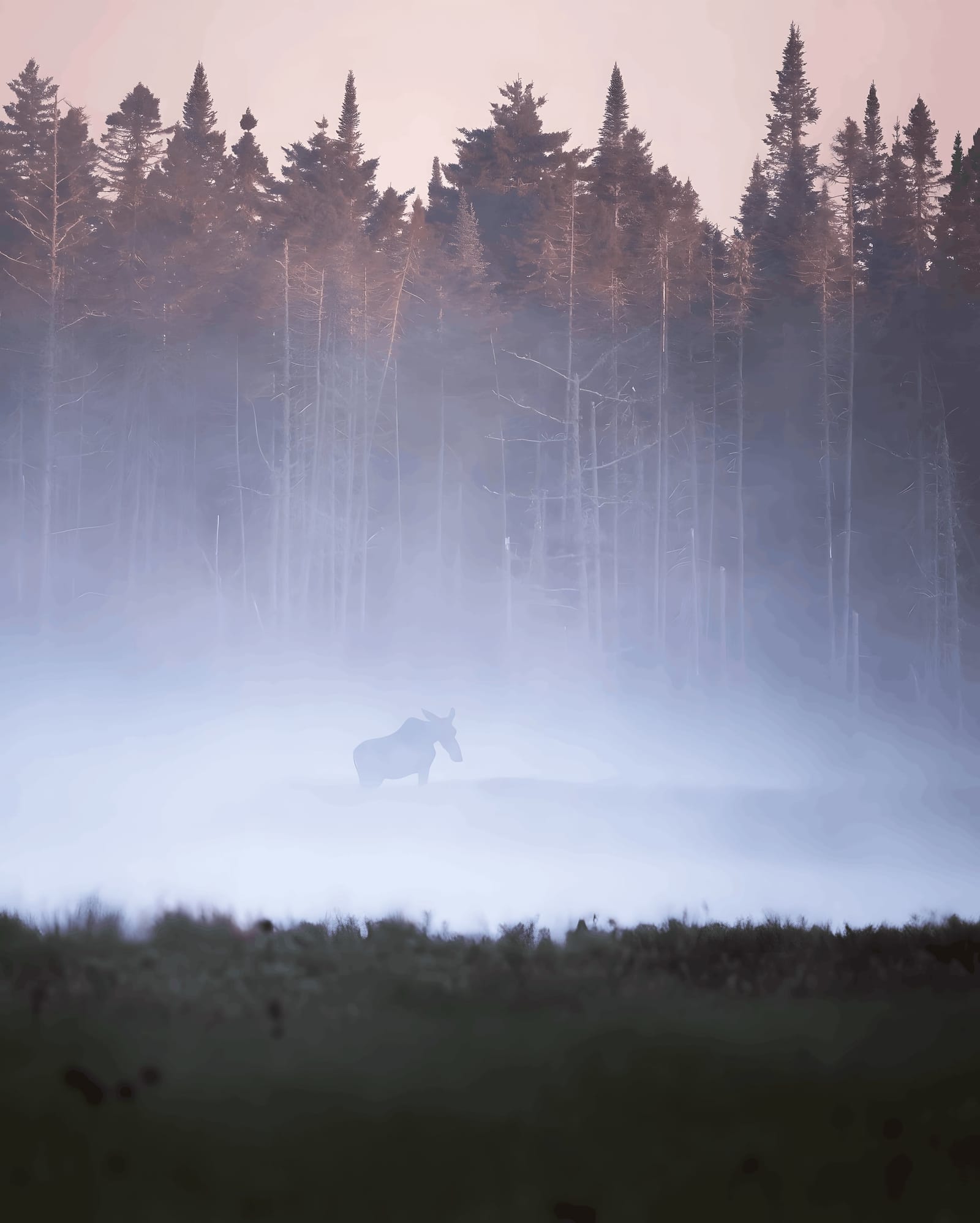
A moose standing in a mist-filled clearing at first light looks almost too perfect, like a painting. But it's a scene you're more likely to find than it seems, because the moose and the mist are both drawn to the same places at the same time of day.
Crepuscular giants
Moose are most active around dawn and dusk. They're built for cold, and in warmer weather they tend to rest through the heat of the day and feed in the cooler hours at either end of it.
The draw of wet ground
Moose spend a lot of time in wet meadows, bogs and pond edges. Aquatic plants there are rich in sodium, a mineral that's scarce in their usual diet of twigs and leaves, and summer moose will wade in to feed on them.
Where fog forms
On clear, still nights, the ground cools quickly and cold air settles in low, damp spots. Moisture condenses into mist exactly there: over wet meadows, marshes and ponds. By sunrise, the lowest, wettest ground is wrapped in fog, which is also where the moose are.
Keep your distance
Moose look calm, but they're huge and can be unpredictable, especially cows with calves and bulls in autumn. A long lens and a wide margin of space are essential.
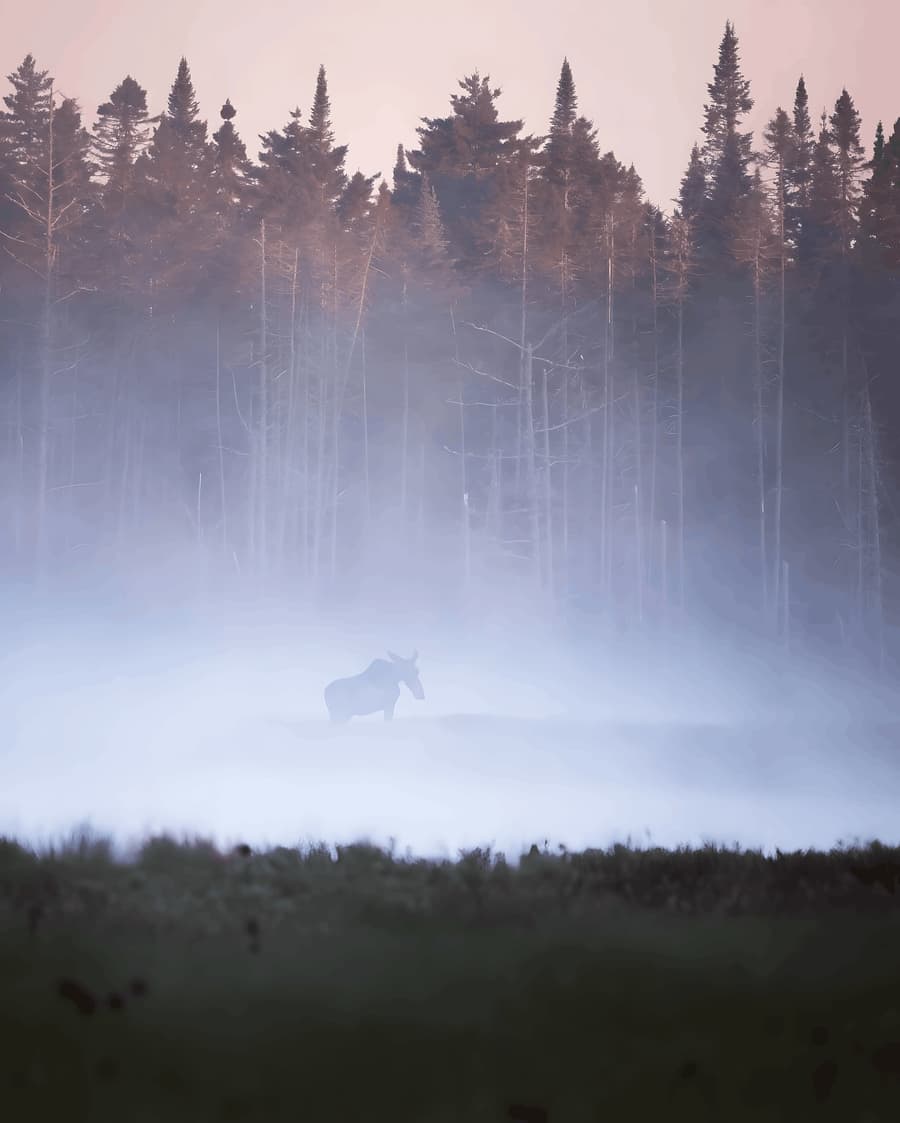
Available as a print
Moose in the Morning Mist
Digital download from $6