
2026-06-05 · Travel · Landscape
Larch Season: Why One Conifer Turns Gold Every Autumn
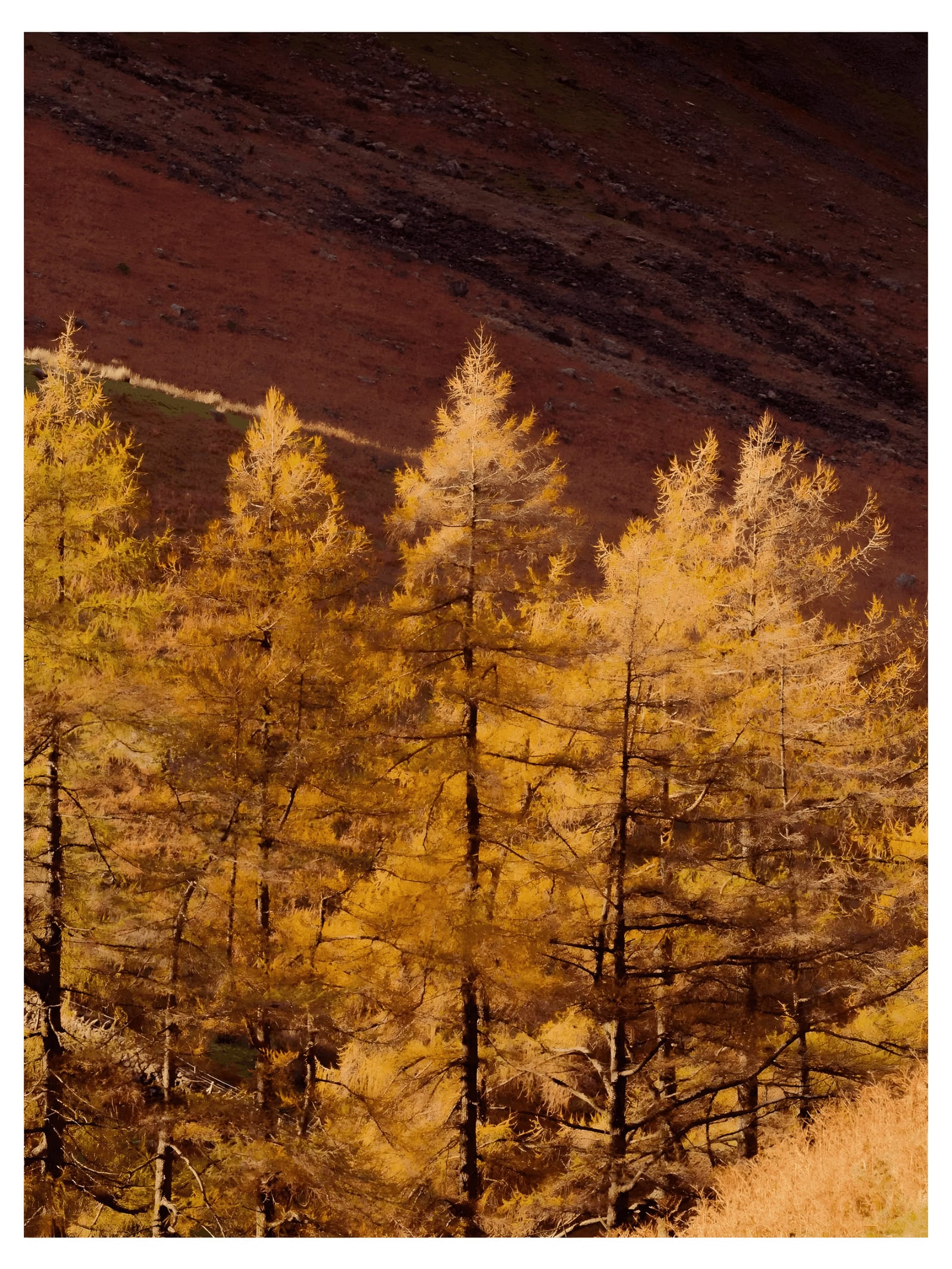
Conifers are supposed to be the evergreen ones — that's the whole point of the word. Larches break the rule entirely: they're deciduous conifers, and every autumn their needles turn a deep gold before dropping completely, leaving bare branches through winter.
Why lose needles at all
Needle-shaped leaves are usually an adaptation for holding onto foliage through winter, since thin needles resist frost damage better than broad leaves. Larches take the opposite strategy, shedding entirely — likely an adaptation to the harsh, high-altitude and high-latitude conditions many larch species grow in, where keeping foliage through a brutal winter costs more than it's worth.
A narrow window
The gold phase lasts only a couple of weeks before needles drop, and the exact timing shifts year to year with temperature and elevation. Higher slopes typically turn first, with the colour working downhill over following weeks — which means the same mountainside can be photographed at completely different stages within the same short season.
Why they stand out in a landscape
Because most conifers around them stay green, a turning larch stand reads as a sharp block of colour against a otherwise static backdrop — unlike broadleaf autumn colour, which is usually surrounded by other trees doing the same thing at the same time.