
2026-09-21 · Wildlife · Behavior
Why a Heron Waits Longer Than You'd Think
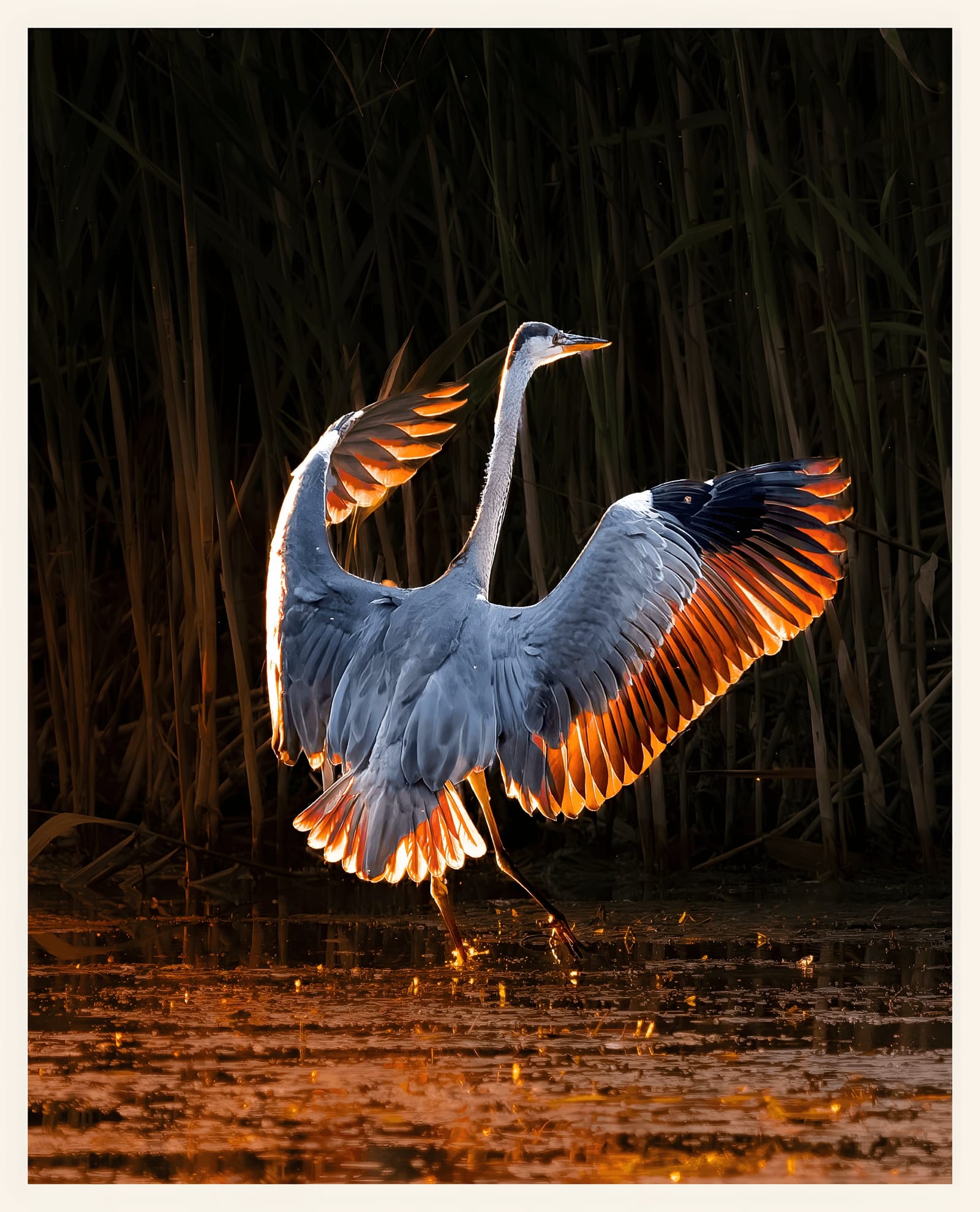
Grey herons hunt by ambush, not pursuit. A bird can stand in the same few inches of shallow water for twenty minutes at a stretch, neck cocked into an S, waiting for a fish or frog to forget it's there.
Stillness is the entire technique
Unlike a kingfisher's dive or an osprey's stoop, a heron's hunting method has almost no motion in it. The bird relies on prey habituating to its silhouette — moving only the last few centimetres, in one fast strike, once a target is close enough. Any earlier movement usually means going hungry.
The moment everything changes
That patience makes the instant a heron does move — startled, or lifting off after a strike — disproportionately dramatic. The wings that were folded tight against the body snap out to a span of nearly two metres, and the bird goes from statue to airborne in a single beat.
Light does the rest
Backlighting at golden hour turns each flight feather translucent, tracing the wing's full structure in a way flat daylight never does. It's a narrow window — a few minutes either side of sunrise or sunset — but it's when a heron's usual grey and white plumage briefly reads as amber and gold.