
2026-09-16 · Macro · Technique
Blurring a Meadow on Purpose
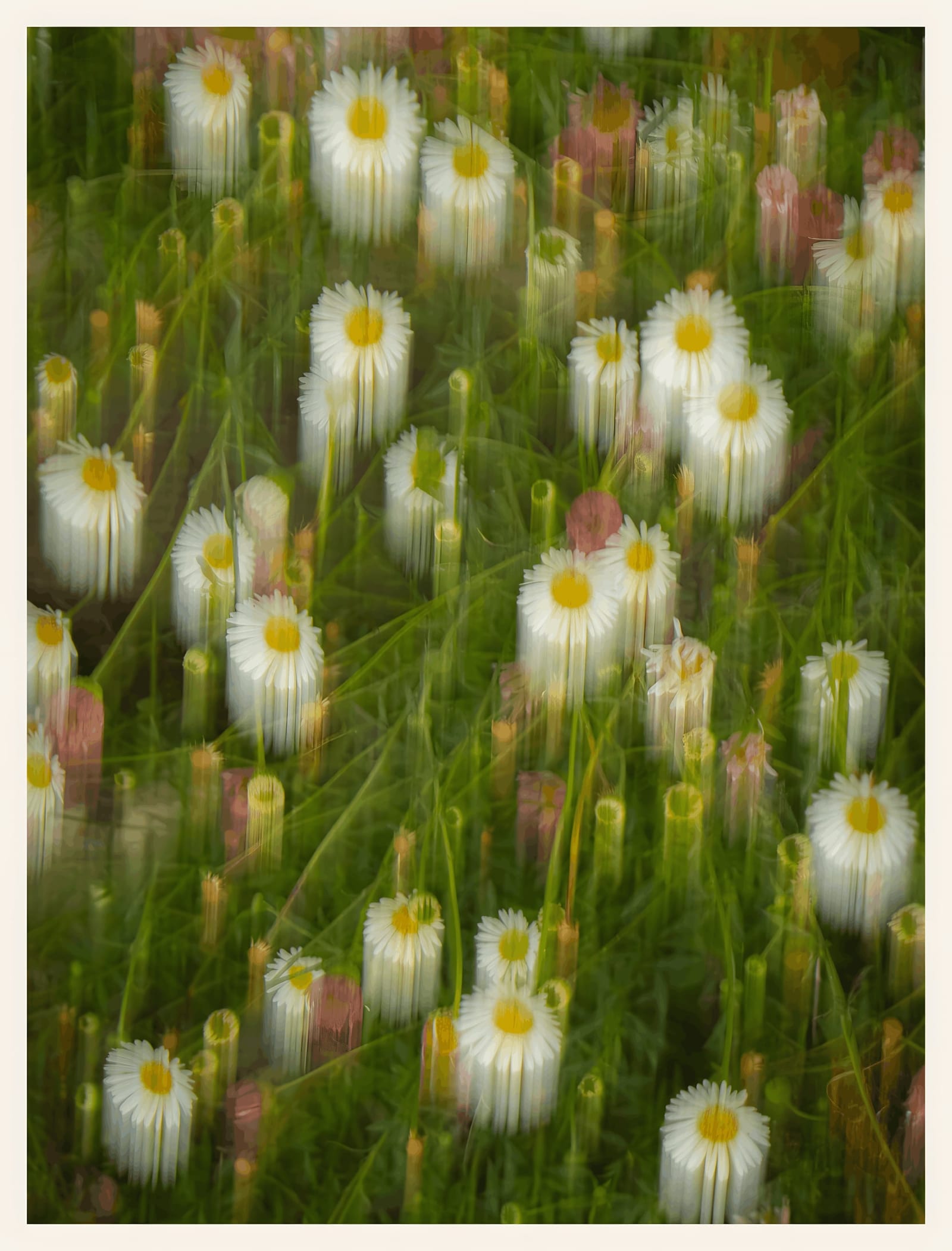
Most camera settings exist to eliminate blur. Intentional camera movement — ICM — does the opposite on purpose, pairing a slow shutter speed with a deliberate sweep or drag of the camera while the shutter is still open.
A technique borrowed from painting, not photography
The result owes more to Impressionist brushwork than to a typical nature photograph. Static, repeated shapes — a meadow of daisies, a stand of trees, a field of grass — hold up best, because the motion has something consistent to smear into streaks rather than a chaotic blur.
The shutter speed is the whole decision
A vertical drag of even half a second is usually enough to stretch a flower head into a soft column of colour. Faster, and the streaks barely register; slower, and the frame can dissolve into something closer to pure abstraction, with no recognisable shape left at all.
Choosing when not to be sharp
Every other image in a wildlife or landscape portfolio is built around getting things in focus. ICM work like this exists mostly as a deliberate contrast to that — a reminder that a meadow can be represented by its colour and rhythm just as honestly as by its detail.