
2026-09-18 · Macro · Wildlife
One Bee, Several Hundred Flowers, One Morning
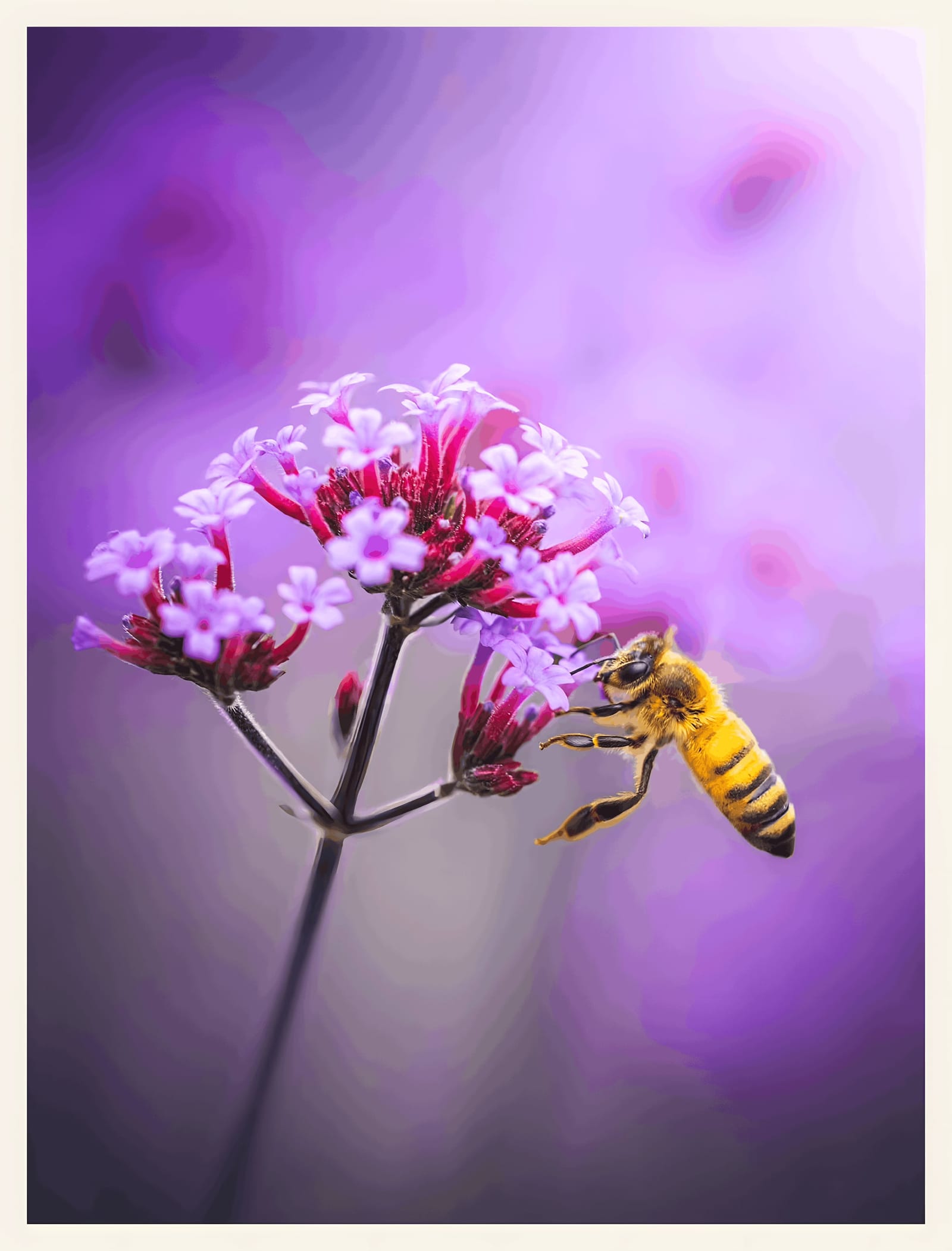
A foraging honeybee can visit several hundred flowers in a single trip out from the hive, only returning once its pollen baskets — the smooth patches on its hind legs — are fully loaded.
Flower clusters are efficient by design
Verbena grows its small flowers in tight, rounded clusters rather than spread out along the stem, which lets a bee work dozens of blooms without traveling far between them. For the plant, it means a single visitor pollinates many flowers at once; for the bee, it means less flying for more reward.
Why macro work rewards patience over speed
A bee doesn't pause for a photograph. Getting a sharp frame at high magnification usually means picking one flower cluster, focusing on the spot a bee is likely to land, and waiting through several failed passes before one visit lines up with the right angle and the right light.
Colour is doing part of the work
Bees see into the ultraviolet and are drawn strongly to blue and purple tones, which is part of why verbena — usually purple, magenta, or white — is a reliable place to find one working. The colour that draws the photographer's eye is, not coincidentally, the same colour drawing the bee's.