
2026-08-22 · Travel · Architecture
Bath's Golden Stone: Why an Entire City Is the Same Colour
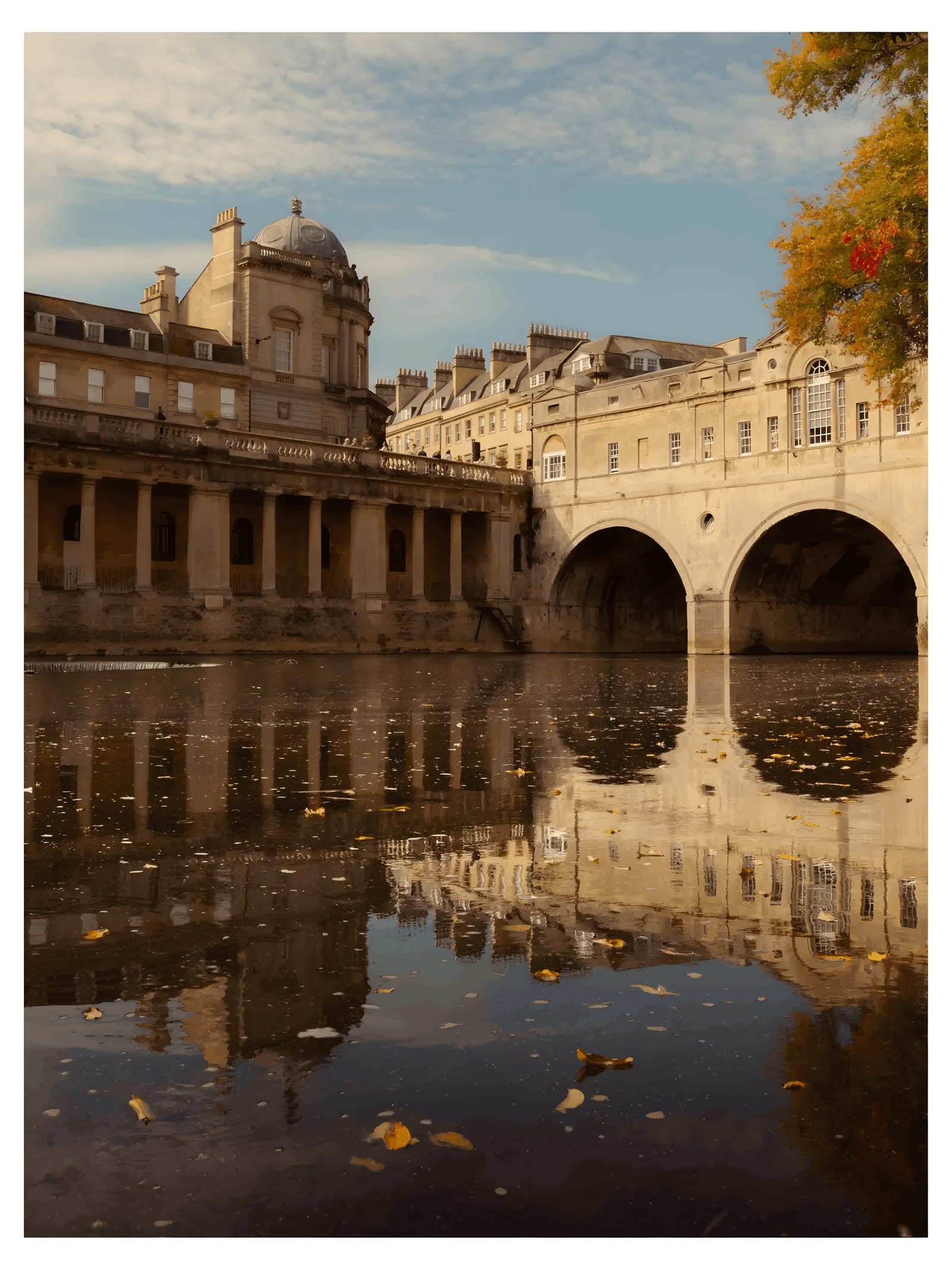
Most cities are a patchwork of building materials accumulated over centuries. Bath is unusually consistent — walk from its Georgian crescents down to the river and the colour barely changes, because nearly everything was built from the same local material.
One quarry region, one look
Bath stone is a honey-coloured limestone quarried from hills immediately around the city, most famously at Combe Down and Bathampton. Because it was the obvious, cheap, local building material for centuries, it ended up in nearly every major structure in the city — from Roman-era remains through the Georgian building boom that gives Bath its best-known look today.
Soft when cut, hard once exposed
Freshly quarried Bath stone is soft enough to be worked with hand tools, which is part of why the city has such elaborate carved detail on its facades — pilasters, mouldings, ornamental stonework that would be far more labour-intensive in a harder stone. Once exposed to air, the surface hardens over time, a property that made it practical for construction despite being easy to cut.
Why the colour shifts through the day
The stone's warm tone means it reads very differently depending on the light. Flat midday sun renders it a fairly neutral pale gold; low, angled light — early morning or the last hour before sunset — pulls out a much deeper amber, which is why the same building along the river can look like two different structures depending on when it's photographed.